The Strike That Shook Latin America
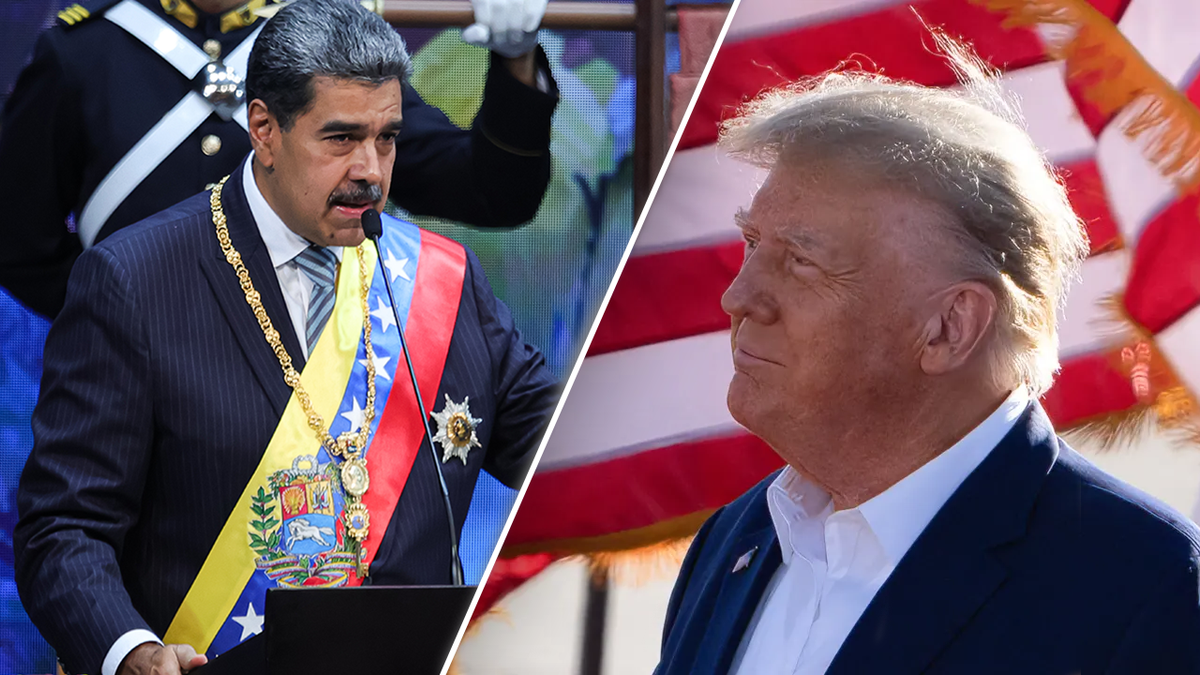
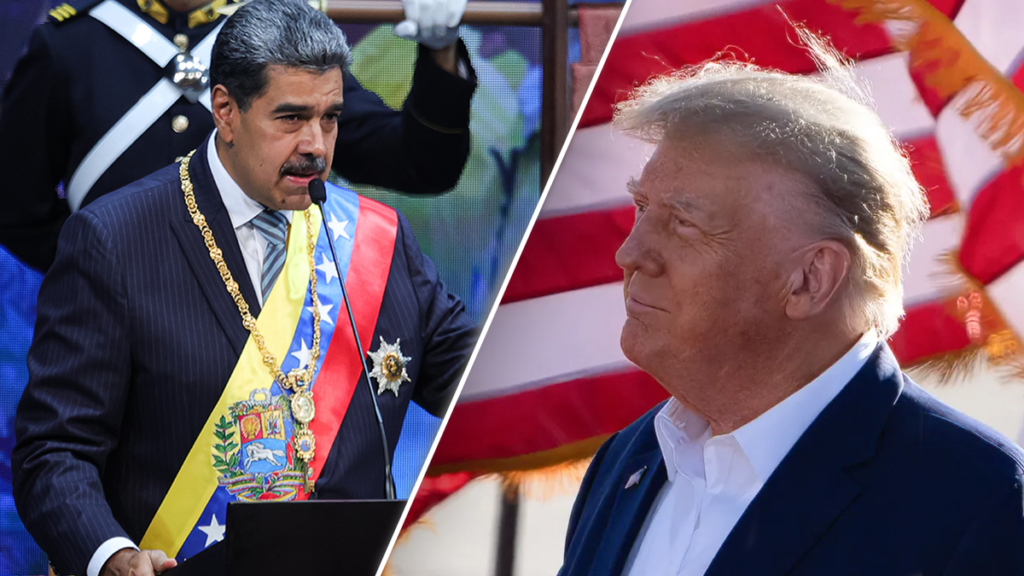
In the early hours of Saturday morning, explosions rocked the Venezuelan capital of Caracas as the United States launched what President Donald Trump called a “large scale strike” against the South American nation. In a stunning announcement on Truth Social, Trump claimed that Venezuelan President Nicolás Maduro and his wife, Cilia Flores, had been captured and flown out of the country.
The operation marks the most dramatic escalation of U.S. military action in Latin America since the 1989 invasion of Panama that toppled Manuel Noriega—an historical parallel that analysts were quick to draw, noting that Noriega was also captured on January 3rd, exactly 36 years ago.
What Happened
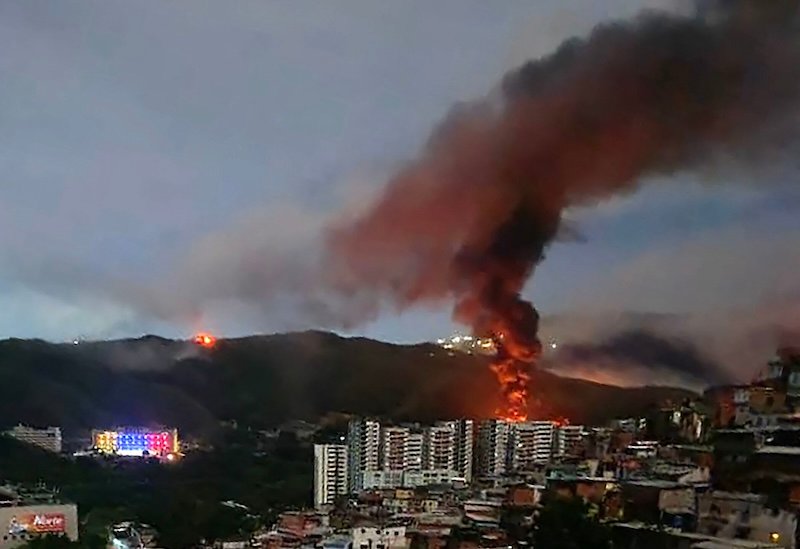
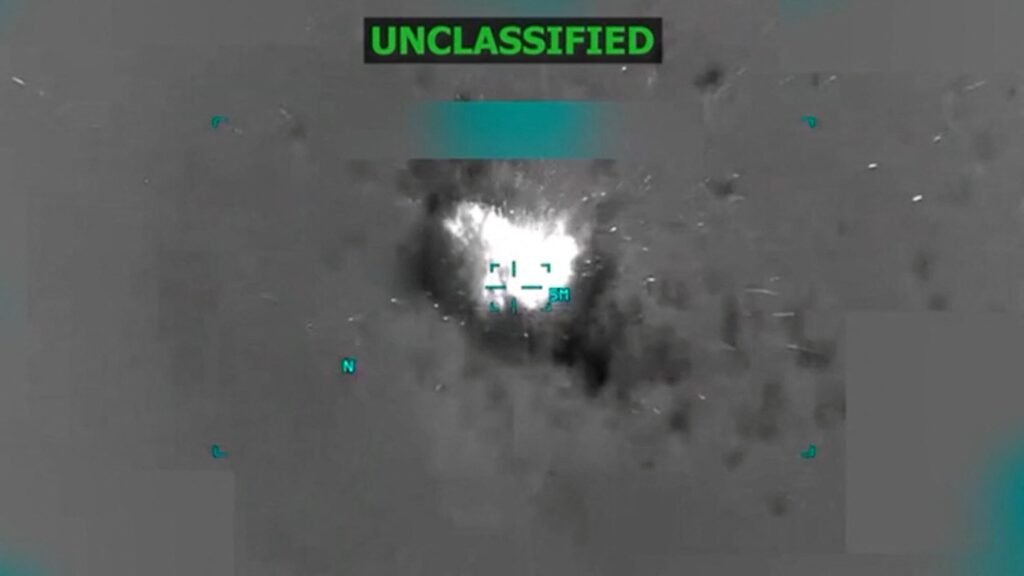
Around 2:00 a.m. local time (1:00 a.m. ET) on Saturday, at least seven explosions were heard across Caracas, accompanied by the sounds of low-flying aircraft. Witnesses reported seeing bright orange flashes in the sky and columns of smoke rising from multiple locations, including:
- Fuerte Tiuna — Venezuela’s largest military complex
- La Carlota Airport — A military airfield in Caracas
- The states of Miranda, Aragua, and La Guaira — Areas surrounding the capital
The strikes left parts of the city without electricity. Venezuelan citizens rushed to the streets, capturing videos of billowing smoke and explosions that quickly spread across social media.
In a phone interview with The New York Times, Trump called it a “brilliant operation” with “a lot of good planning and lot of great, great troops and great people.”
Venezuelan Government Response
Venezuelan Vice President Delcy Rodríguez, speaking by phone to state television, demanded “immediate proof of life” from the Trump administration, confirming that the government does not know the whereabouts of Maduro or the First Lady. She reported that the attacks have resulted in deaths among officials, military personnel, and civilians.
Defense Minister Vladimir Padrino López declared a “state of external commotion” (effectively a national emergency) and ordered a “massive deployment” of military forces across the country. In a video message, he called the strikes “the worst aggression” ever suffered by Venezuela and urged national unity against what he termed an “invasion.”
“They’ve attacked us but they will not subdue us,” López declared. “Let’s not succumb to the panic the enemy seeks to instill.”
The Venezuelan government has accused Washington of staging the assault to seize the country’s vast oil and mineral reserves, pledging that such efforts “will not succeed.”
How We Got Here: A Timeline of Escalation
The roots of this crisis trace back to Venezuela’s presidential election on July 28, 2024. Despite extensive evidence that opposition candidate Edmundo González Urrutia won by a landslide—with some analyses showing him receiving around 67% of the vote compared to Maduro’s 30%—the government-controlled National Electoral Council declared Maduro the winner with 51.2% of the vote.
The Disputed 2024 Election
The opposition had taken extraordinary precautions: volunteers at over 30,000 polling stations photographed and digitized roughly 85% of the official tally sheets, creating an independent record that directly contradicted the government’s claims. International monitors, including the Carter Center and the Organization of American States, rejected the official results. Political scientist Steven Levitsky called it “one of the most egregious electoral frauds in modern Latin American history.”
The United States and numerous other countries recognized González as the legitimate winner. An arrest warrant forced González into exile in Spain, while opposition leader María Corina Machado—who had been banned from running herself—went into hiding within Venezuela.
Trump’s Pressure Campaign
When Trump returned to office in January 2025, he dramatically escalated pressure on Maduro:
- August 2025: Signed a secret directive permitting the Pentagon to use military force against Latin American drug-trafficking groups. Raised the bounty on Maduro to $50 million and designated the “Cartel de los Soles” (Cartel of the Suns) as a Foreign Terrorist Organization.
- September 2025: Launched Operation Southern Spear, beginning with strikes on boats in the Caribbean Sea allegedly carrying drugs. The first strike killed 11 people on a vessel the U.S. claimed was operated by the Tren de Aragua gang.
- October-November 2025: Deployed the largest U.S. military presence in the Caribbean in half a century, including the aircraft carrier USS Gerald R. Ford, the amphibious assault ship USS Iwo Jima, F-35 fighter jets, and approximately 15,000 troops.
- December 2025: Ordered a “total and complete blockade” of sanctioned oil tankers entering or leaving Venezuela. U.S. forces seized Venezuelan-linked oil tankers. The CIA reportedly conducted a drone strike on a port facility on the Venezuelan coast—the first known attack on Venezuelan territory.
- Late December 2025: Trump confirmed a strike on a dock allegedly used to load drug boats, and warned that land strikes would begin “soon.”
By the time of the January 3rd operation, at least 115 people had been killed in more than 35 strikes on alleged drug boats, according to various reports.
The U.S. Justification
The Trump administration has framed its actions as a counter-narcotics campaign targeting “narco-terrorists.” Officials accuse Maduro of personally leading the Cartel de los Soles, a drug-trafficking organization allegedly embedded within Venezuela’s government and military.
Senator Mike Lee stated that Secretary of State Marco Rubio informed him that Maduro was arrested “to stand trial in the United States.” The U.S. has maintained a $50 million bounty for information leading to Maduro’s arrest.
However, critics note that the administration has not publicly provided evidence linking specific targets to drug trafficking. The UN High Commissioner for Human Rights has warned that the airstrikes violate international human rights law, arguing that countering drug trafficking is a law-enforcement matter subject to strict limits on lethal force.
Global Reaction: A World Divided
Condemnation
Colombia: President Gustavo Petro was among the first to react, posting on social media as the explosions occurred: “Alert to the whole world, they have attacked Venezuela bombing with missiles.” He announced the deployment of Colombian military forces to the Venezuelan border and condemned what he called “aggression against the sovereignty of Venezuela and of Latin America.”
Cuba: President Miguel Díaz-Canel denounced the attack as a “criminal” act of “state terrorism” against not just Venezuela but “Our America,” calling for urgent international reaction.
Russia: The foreign ministry accused the U.S. of “an act of armed aggression against Venezuela,” calling the pretexts for the action “unfounded.”
Iran: Condemned the attack as a “flagrant violation of the national sovereignty and territorial integrity” of Venezuela.
Chile: President Gabriel Boric expressed “concern and condemnation,” reaffirming Chile’s commitment to international law principles including “the prohibition of the use of force, non-intervention, the peaceful settlement of international disputes, and the territorial integrity of States.”
Support and Caution
Argentina: President Javier Milei, a Trump ally, praised the operation, posting on X: “Freedom lives.”
European Union: High Representative Kaja Kallas said the EU is “closely monitoring the situation,” emphasizing that “the principles of international law and the UN Charter must be respected” while calling for restraint.
Spain: Called for de-escalation, moderation, and respect for international law.
Legal Questions and Congressional Concerns
The operation has immediately raised serious legal and constitutional questions.
Professor Marc Weller of Chatham House stated unequivocally that the strikes are “prohibited under international law,” noting that force is “only available in response to an armed attack or possibly to rescue a population under imminent threat of extermination. Clearly, none of these requirements are fulfilled.”
Democratic lawmakers have sharply criticized the action:
- Senator Ruben Gallego (D-AZ): “This war is illegal. It’s embarrassing that we went from the world cop to the world bully in less than one year.”
- Senator Brian Schatz (D-Hawaii): “We should have learned not to stumble into another stupid adventure by now.”
Trump declined to answer questions about whether he sought congressional authorization for the strike, saying he would address the issue at a scheduled press conference at Mar-a-Lago.
Venezuela has requested an urgent meeting of the United Nations Security Council.
What Comes Next?
The immediate future remains deeply uncertain. Under Venezuela’s constitution, power would pass to Vice President Delcy Rodríguez if Maduro is incapacitated. But with Maduro’s whereabouts unknown and the military calling for mass mobilization, the coming hours and days will be critical.
Several scenarios are possible:
- Power Transition to the Opposition: The opposition, led by exiled leader Edmundo González, may see this as a pivotal opportunity to claim the presidency they believe was stolen in 2024.
- Military Resistance: Defense Minister López has called for united resistance. Venezuela is a heavily armed society, and some military factions may retreat into guerrilla warfare.
- Negotiated Settlement: International pressure could force a negotiated political transition, potentially involving guarantees for departing government officials.
- Continued Chaos: Without clear leadership, Venezuela could descend into instability, potentially triggering a massive refugee crisis beyond the 8 million who have already fled the country.
The U.S. Embassy in Venezuela has warned American citizens to “shelter in place and depart immediately when it is safe to do so.”
Why This Matters
Venezuela sits atop some of the world’s largest proven oil reserves—larger even than Saudi Arabia’s. Its strategic importance has made it a flashpoint in U.S.-Latin American relations for decades.
For supporters of the Trump administration’s approach, this represents decisive action against a dictator who stole an election and allegedly runs a drug-trafficking operation that threatens American lives. Opposition leader María Corina Machado had expressed gratitude for Trump’s pressure campaign, calling him “a champion of freedom in this hemisphere.”
For critics, it represents a dangerous return to interventionism in Latin America, undertaken without congressional approval or clear legal justification. The precedent of using military force to topple governments accused of drug trafficking could destabilize the entire region.
As smoke rises over Caracas and the world awaits Trump’s scheduled press conference, one thing is clear: the situation in Venezuela has entered an entirely new phase—one whose consequences will reverberate far beyond the Caribbean for years to come.
This story is developing. Check back for updates.